
Keel-Billed Toucan care sheet
Ramphastos sulfuratus
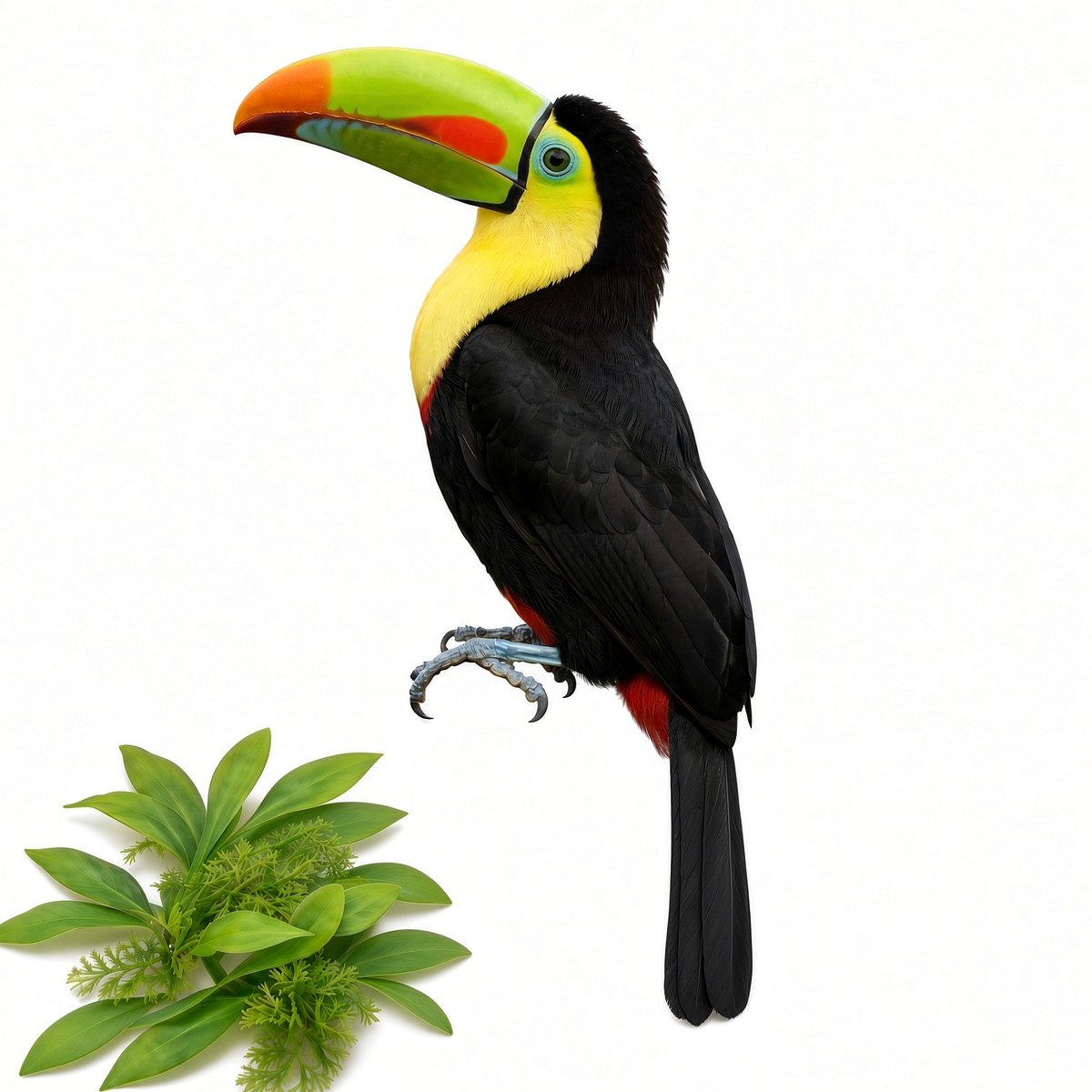
Overview
Keel-billed toucans are large Central American ramphastids famous for the rainbow bill. They are intelligent, messy, active softbills that need huge flight space and a carefully managed low-iron diet because captive toucans are highly prone to iron storage disease (hemosiderosis/hemochromatosis).
Enclosure
- Think aviary, not parrot cage. Large Ramphastos toucans need long flight lines — published husbandry guidance emphasizes large outdoor aviaries (examples in the multi-dozen to 100+ sq ft class with substantial length/height) or equivalently roomy indoor flights.
- Horizontal flight space matters more than a tall skinny cage.
- Multiple perches of varied diameter, visual barriers, and easy-clean flooring with excellent drainage.
- Secure against escape and against wild animal contamination of floor water/food.
For “Water / Temps”: toucans need clean drinking water changed often; they are not aquatic. Keep them within comfortable tropical household/aviary temperatures — avoid cold damp drafts. Ask your avian vet for your climate’s exact range.
Water / Temps
Provide fresh water in clean bowls; change frequently (toucans dunk food). Avoid rusty waterers (extra iron). Maintain warm, stable ambient conditions suitable for a Neotropical softbill and protect from overnight cold snaps in outdoor aviaries.
Substrate
Use easy-clean aviary flooring (sealed concrete, pavers, or well-managed natural substrate with drainage). Spot-clean fruit mess daily. Prevent standing dirty puddles mixed with feces — a disease risk highlighted in toucan husbandry manuals.
Lighting / UVB
Natural daylight in outdoor aviaries is ideal. Indoor birds need a bright full-spectrum day length; discuss UVB needs with an avian vet for indoor-only setups. Provide shade so birds can choose light levels.
Diet & feeding amounts
Daily fresh diet. Core pattern used by zoos/aviculturists:
- Low-iron softbill pellets mixed with diced fruit (pellets often targeted <~90–100 ppm iron when possible).
- Fruit diced small (~¼–⅓ inch) so pellets stick to moist fruit surfaces.
- Feed fresh food at least daily (often AM, with removal of spoilage).
- Example zoo-style adult Ramphastos daily framework (scale with vet guidance): hundreds of grams of mixed fruit plus measured low-iron pellets (not free-choice high-iron kibbles).
Foods they love
- Papaya, melon, banana, berries, grapes (cut), apple, pear, mango (variety rotates)
- Low-iron commercial softbill diets (e.g., formulations marketed for toucans/softbills)
- Occasional low-iron protein items only as directed by avian vet/nutrition protocols
Foods to AVOID (and why)
- High-iron diets / high-iron dog food staples: iron storage disease risk.
- Citrus, tomato, pineapple (high vitamin C / citric acid): vitamin C can increase iron absorption — commonly restricted in toucan diets for that reason.
- Avocado: toxic to many birds.
- Chocolate, caffeine, alcohol, salty chips, xylitol foods
- Fruit-only diets with no formulated base: incomplete nutrition.
What not to do
- Don’t keep in a small parrot cage long-term.
- Don’t ignore iron content of pellets/water/dishes.
- Don’t skip avian vet wellness checks / bloodwork when recommended.
- Don’t leave spoiled fruit in the aviary.
Health signs
Iron storage disease may show as lethargy, anorexia, breathing effort, coelomic swelling, neurologic signs, or sudden death. Other concerns: aspergillosis, parasites, bill trauma. Build a relationship with an avian vet before problems start.
Quick facts
Learn more: the natural history of the keel-billed toucan
The rainbow bill is only the beginning. This is an agile canopy animal, a major fruit eater and seed disperser, a cavity-nesting parent, and a highly social bird with specialized captive nutritional needs.
Names, taxonomy, and forest origins
Ramphastos sulfuratus belongs to the toucan family Ramphastidae in the order Piciformes. “Rainbow-billed toucan” and “sulfur-breasted toucan” are alternative English names. Its range extends from southern Mexico through Central America into northern Colombia and northwestern Venezuela. It is Belize’s national bird. Taxonomic treatments have varied in recognizing subspecies and in placing the species within the toucan genus, but the keel-billed toucan is treated as one species.
Range, habitat, and ecological role
It lives mainly in humid lowland forest canopy, occasionally reaching foothill elevations and visiting edges, secondary growth, and plantations when fruiting trees are available. Mature forest remains essential for nesting cavities and a varied year-round food supply. By swallowing fruit and moving or regurgitating viable seeds, toucans help regenerate trees away from the parent plant.
Wild status, trade, and Florida
The global population is declining and is currently treated as Near Threatened, driven especially by forest loss, hunting, and trapping. International commercial trade is regulated under CITES Appendix II. The species is not native to Florida and must never be released. Purchase only legally documented birds and verify current federal, state, county, and municipal permit requirements with the relevant authorities before acquisition or transport.
Anatomy: a large bill without a heavy head
- Bill construction: A lightweight internal framework supports a thin outer keratin sheath. It can exceed 30% of total body length, yet does not make the bird impossibly front-heavy.
- Precision feeding: The bill reaches fruit on slender twigs, plucks and manipulates food, and tosses items back into the throat. Serrated edges help grip food; the bill is not chewing machinery.
- Heat control: Large toucan bills are richly supplied with blood vessels. Research in toucans shows they adjust blood flow to unload body heat through the bill—an adaptation relevant to this family, not a license to overheat captive birds.
- Feet and tongue: Two toes point forward and two backward for gripping branches. The long, narrow, brush-edged tongue helps move food.
Size, growth, senses, and movement
Adults are commonly around 42–55 cm (17–22 in) long including bill and tail, often near 380–500 g. Males average somewhat larger, but appearance alone is not a reliable sexing method. Chicks hatch with relatively small bills that lengthen as they grow. Toucans rely strongly on vision, hearing, touch, and social cues. Their broad, short wings suit bursts between trees more than sustained long-distance flight; indoors they need horizontal room and many routes to hop, climb, and fly.
Wild diet, flock life, and communication
Fruit dominates the wild diet, supplemented by insects and other invertebrates, small reptiles or amphibians, and occasional bird eggs or nestlings. Small flocks move among fruiting trees, rest together, preen, and engage in bill-touching or food-passing interactions. Their calls are often croaking or frog-like rather than melodic. Activity is generally diurnal, with roosting in sheltered tree sites.
Reproduction and chick development
Pairs use natural hollows or old woodpecker cavities rather than excavating hard wood themselves. A typical clutch is 2–4 white eggs, and both parents incubate and feed the chicks. Hatching usually occurs after roughly 16–20 days. Chicks are naked, helpless, and initially have closed eyes; they remain in the cavity for about 8–9 weeks while feathers and the distinctive bill develop. Successful breeding requires compatible adults, privacy, suitable cavities, and professional nutrition—not simply placing two birds together.
Temperament, enrichment, and safe handling
They are intelligent and curious but not domesticated “cuddle birds.” Individuals may be calm with trusted caretakers or defensive around hands, food, or nests. Build voluntary stationing and recall behaviors with positive reinforcement. Rotate foraging puzzles, safe browse, varied perches, bathing opportunities, and visual barriers. Avoid towel restraint or grabbing unless trained staff or a veterinarian considers it necessary; the bill and neck can be injured by poor handling.
Medical issues and warning signs
- Iron overload: Excess iron can accumulate in the liver and other organs. Lethargy, appetite loss, swelling, breathing difficulty, neurologic change, or sudden collapse requires urgent avian veterinary care.
- Digestive and nutritional problems: Fruit-only diets, rancid food, contaminated bowls, and inappropriate supplements can cause serious illness.
- Bill and foot injury: Cracks, discoloration, bleeding, overgrowth, lameness, or pressure sores should not be trimmed or treated at home without veterinary instruction.
- Other concerns: Parasites, bacterial or fungal infections, respiratory disease, and feather damage can develop. Weight trends and droppings often reveal trouble before obvious symptoms.
Husbandry details experienced keepers emphasize
Have an avian veterinarian establish a baseline exam, weight, and appropriate testing. Weigh on a consistent schedule, measure diet rather than guessing, scrub bowls daily, and use non-rusting food-contact equipment. Store pellets correctly and discard damp or spoiled batches. Outdoor aviaries need predator exclusion, shade, dry shelter, clean drainage, and protection from wild-bird and rodent contamination. “More fruit is always better,” rusty-water myths, and citrus as a harmless staple are not reliable guidance.
Myths and memorable facts
- Myth: “The huge bill is solid bone.” Fact: Its lightweight structure is a sophisticated combination of support and outer keratin.
- Myth: “Toucans are oversized parrots.” Fact: They are piciform birds with different diet, behavior, and medical risks.
- Myth: “Bright fruit alone is a complete diet.” Fact: Captive birds need a carefully formulated low-iron nutritional base.
- Fun fact: Both parents share incubation and chick feeding, and large seeds can survive travel through a toucan.