
Fly River Turtle care sheet
Pig-nosed turtle · Carettochelys insculpta
Overview
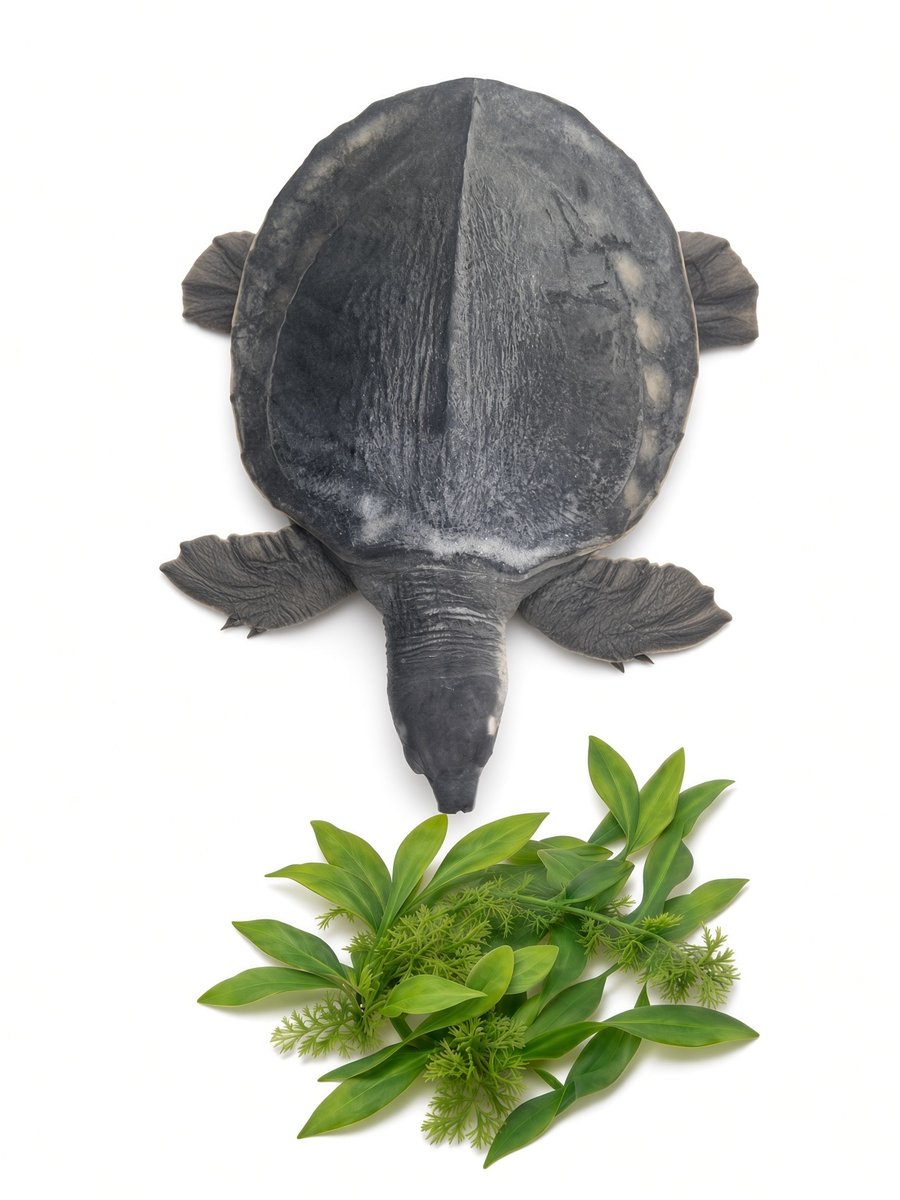
The Fly River (pig-nosed) turtle is a fully aquatic freshwater species from northern Australia and southern New Guinea. It has a soft, leathery carapace (no hard scutes), flipper-like limbs, and a fleshy “pig” snout used for breathing at the surface. Adults are large, long-lived, and need excellent water quality — this is an advanced species, not a beginner turtle.
In the wild they use rivers, lagoons, and floodplain waters with sandy/silty bottoms. Captive care focuses on warm, hard, alkaline freshwater, powerful filtration, space to swim, and a plant-forward omnivore diet.
Enclosure
- Babies/juveniles: Start large (many keepers use 75–125+ gallons as soon as practical). They grow fast and are strong swimmers.
- Adults: Custom ponds, stock tanks, or very large indoor systems are typical. Think “pond volume,” not a desktop aquarium.
- No land basking beach is required for daily health (they rarely haul out like sliders), but provide underwater cover, resting ledges near the surface, and a failsafe exit platform if heaters fail.
- Use non-abrasive décor. Avoid sharp gravel/rocks that can scrape the soft shell/skin.
- Filtration should turn over the system many times per hour; expect heavy waste. Plan large, frequent water changes.
Water / Temps
Water quality is critical because the soft shell/skin is prone to bacterial and fungal problems in dirty or unstable water. Dechlorinate tap water; monitor ammonia/nitrite/nitrate; consider UV sterilizers as a support tool, not a substitute for cleaning.
Substrate
These turtles like to dig and may bury themselves. Fine, smooth sand (or a fine sand / crushed-coral mix for hardness) deep enough for the turtle to cover its whole body is a good behavioral match — often several inches for babies, deeper as they grow.
- Prefer fine sand over gravel/pebbles (gravel impaction and shell abrasion risk are repeatedly flagged for this species).
- Sand makes cleaning harder — siphon and rinse regularly; bare-bottom is cleaner if you cannot maintain sand hygiene.
- Never use sharp substrate, calcium sand marketed for desert reptiles, or oily “play sand” with additives.
Lighting / UVB
Fly River turtles are largely aquatic and often do not bask on land. Broad-spectrum day lighting for a natural day/night cycle is important. UVB penetration through water is limited; many experienced keepers emphasize dietary vitamin D3 and excellent nutrition. If UVB is used, choose a fixture appropriate for aquatic setups, provide shade gradients, and follow manufacturer distance/replacement schedules. Cuttlebone (calcium) is commonly offered.
Diet & feeding amounts
Opportunistic omnivores that prefer plant matter (wild diet centers on figs/fruits/vegetation, with some animal prey). Overfeeding animal protein can drive unhealthy rapid growth and organ stress.
- Hatchlings / first ~6 months: Often fed daily — quality aquatic turtle/tortoise pellets or carefully portioned animal foods once daily to reduce appetite (not gorge), plus edible aquatic plants/leafy greens available to graze.
- After ~6 months: Many keepers shift richer foods to every other day; keep plant matter available more often.
- Older juveniles/adults: Common successful schedules are plant-heavy offerings most days with animal/protein items ~2–3× weekly (adjust to body condition).
- Remove uneaten animal foods promptly to protect water quality.
Guppies (and similar livebearers) as an occasional treat: Guppies are generally considered lower-risk for thiaminase than goldfish/rosy reds and can be an enrichment feeder occasionally — not a daily staple. Only use healthy fish from a clean, quarantined source (ideally home-cultured or from a known-healthy tank). Still gut-load/condition them and keep fish as a small part of a balanced turtle diet built around quality pellets, invertebrates, and appropriate plants/greens.
Foods they love
- Figs and other soft fruits (banana, apple, kiwi, papaya) in moderation as part of variety
- Edible aquatic plants (e.g., Vallisneria / eelgrass, water lettuce where legal/safe) and dark leafy greens
- Quality commercial turtle/tortoise pellets with vitamin D3
- Occasional shrimp, earthworms, or small clean fish as enrichment — not the whole diet
- Spirulina / algae wafers as a plant-leaning option some keepers use
Foods to AVOID (and why)
- Goldfish & rosy red minnows as staples: thiaminase → B1 deficiency; high fat; parasite/disease risk.
- Fatty meats, processed human junk, dog/cat food as staples: excess fat/protein/salt.
- Iceberg lettuce: empty calories, little nutrition.
- Toxic plants / unknown wild plants: only feed known-safe species.
- Large gravel “food” accidents: not food, but a major impaction risk if ingested from substrate.
What not to do
- Don’t keep them in cool, soft, acidic, or dirty water.
- Don’t house in a tiny “starter kit” long-term — plan adult volume early.
- Don’t use abrasive décor that scrapes the soft shell.
- Don’t overfeed protein-heavy diets for fast growth.
- Don’t mix aggressive tankmates that can bite flippers/snout.
Health signs
Seek an exotic/aquatic vet if you see: fuzzy patches or shell/skin lesions, buoyancy problems, swollen eyes, open-mouth breathing, lethargy, appetite loss, soft shell, bloody stool, or injuries. Quarantine new animals. Wash hands after water changes (Salmonella risk with reptiles).
Quick facts
Learn more: the natural history of the Fly River turtle
This species is unlike any other freshwater turtle. The deeper you look, the more its unusual body and life cycle make sense as adaptations to tropical rivers that change dramatically between wet and dry seasons.
Names, taxonomy, and an ancient lineage
Carettochelys insculpta is the only living member of the family Carettochelyidae. Its relatives once ranged much more widely, but today it survives only in New Guinea and northern Australia. It is a cryptodire (hidden-necked turtle) within Trionychia, the lineage that includes living softshell turtles, and retracts its neck straight back rather than folding it sideways. “Fly River turtle,” “pig-nosed turtle,” and “pitted-shelled turtle” all refer to this one species; regional Indigenous names also exist.
Range and river habitat
Wild turtles occur in southern New Guinea and rivers draining into Australia’s Gulf of Carpentaria and Top End. They use large permanent rivers, deep pools, lagoons, and connected floodplain waters. Flow, depth, sandbars, underwater shelter, and seasonal rainfall shape where they feed and nest. Australian and New Guinea populations are not identical, so adult size and local behavior can differ.
Conservation and responsible keeping
The species is globally Endangered under the current IUCN assessment: unsustainable harvesting for food and the pet trade has caused severe declines, with ongoing and future decline expected over three generations. Slow reproduction limits recovery. Australia also treats it as Vulnerable under national law, in part because livestock and invasive water buffalo damage nesting banks. Changing river flow and early flooding can destroy nests. International trade is controlled under CITES Appendix II. Keep legally acquired, captive-bred animals with clear records; never release one into Florida or any other non-native waterway.
A body built for water
- Flippers: The paddle-like forelimbs resemble a sea turtle’s and provide powerful strokes. Webbed hind feet help steer and maneuver.
- Soft shell: Skin covers the carapace rather than the large, obvious horny scutes of a slider. That surface is vulnerable to scrapes and infection, which is why smooth décor and clean water matter.
- Pig-like nose: The fleshy, tubular snout lets the turtle take a breath with little of its head exposed and also helps it investigate food in turbid water.
- Reduced land use: Adults spend nearly all their lives swimming; healthy females come ashore mainly to nest. A turtle that repeatedly leaves the water is not necessarily “asking to bask”—check the setup and animal.
Size, growth, senses, and daily life
Hatchlings are commonly roughly 4–6 cm (1.6–2.4 in) in shell length, while exceptional adults may approach roughly 70 cm (27.5 in) of shell length and 30 kg (66 lb). Australian animals are generally smaller. Growth is fastest when young and depends on genetics, temperature, and diet; pushing rich food for rapid growth is not healthy. They are long-lived. Estimates from studied Australian populations put maturity at roughly 14–16 years for males and 20–22 years for females; these are population estimates, not a guaranteed captive schedule. Sight, touch, chemical cues, and sensitivity to water movement help them navigate, locate food, and detect other animals. They can be alert and wary, with activity influenced by light, temperature, and security.
Wild diet and feeding behavior
They forage on figs and other fallen fruit, aquatic vegetation, leaves, flowers, and plant material, plus snails, insects, crustaceans, fish, and carrion when available. This flexible omnivory changes with seasons and local food supply. Plant material is a substantial part of the natural diet, not merely filler. In captivity, measured pellets, appropriate greens, and limited animal foods provide more controlled nutrition than an all-meat menu.
Reproduction and an egg that waits
In well-studied Australian populations, females commonly reproduce every other year and often produce two clutches in a breeding year. They dig shallow nests in exposed sandbanks during the dry season; clutch size varies among rivers, often around 7–15 eggs in well-studied Australian populations. Incubation is temperature dependent, and warmer incubation generally produces females while cooler conditions produce males.
The remarkable part is embryonic aestivation: a fully developed hatchling can remain inside the egg after normal development is complete. Early wet-season rain or rising water lowers oxygen around the egg and helps trigger hatching. This synchronizes emergence with favorable river conditions—but an early flood can drown nests instead. Never rotate, flood, or “help” incubating eggs based on this adaptation.
Temperament and handling
Individuals range from shy to bold, and adults can be territorial toward other turtles. They are observation animals, not frequent-handling pets. Support the entire body with both hands, keep fingers away from the mouth, use a tub for transfers when practical, and never lift by a limb, tail, or snout. Plan separate housing if aggression or injuries appear.
Health problems worth catching early
- Skin or shell infection: Fuzzy films, pale or red lesions, pitting, odor, or sloughing demand prompt water-quality correction and veterinary assessment.
- Respiratory or systemic illness: Persistent lethargy, poor appetite, abnormal buoyancy, or labored breathing are not normal shyness.
- Nutritional disease: A soft shell, deformity, weakness, or poor growth can reflect calcium/vitamin D or overall diet problems.
- Injuries: Look for bitten flippers, snout damage, abrasions, and swallowed-substrate problems. Quarantine and gradual acclimation reduce risk.
Practical lessons from experienced keepers
Consistent success usually comes from oversized filtration, regular water testing, warm stable alkaline water, smooth furnishings, and restraint with rich foods. Keep a hospital/transfer container available before an emergency, use a secure heater guard, and maintain power-outage plans. Unverified salt “cures,” forced basking routines, and chasing rapid growth with rich food are not sound substitutes for species-specific husbandry.
Myths and memorable facts
- Myth: “It is basically a freshwater sea turtle.” Fact: The flippers are an independent aquatic adaptation; it is not a sea turtle.
- Myth: “No basking means no care overhead.” Fact: Its water chemistry, space, sanitation, and skin health require advanced planning.
- Fun fact: Its flippered forelimbs are unusual among living freshwater turtles, while its closest living relatives are softshell turtles.
- Fun fact: Its unusual nose gives it one of the most recognizable profiles of any turtle.